
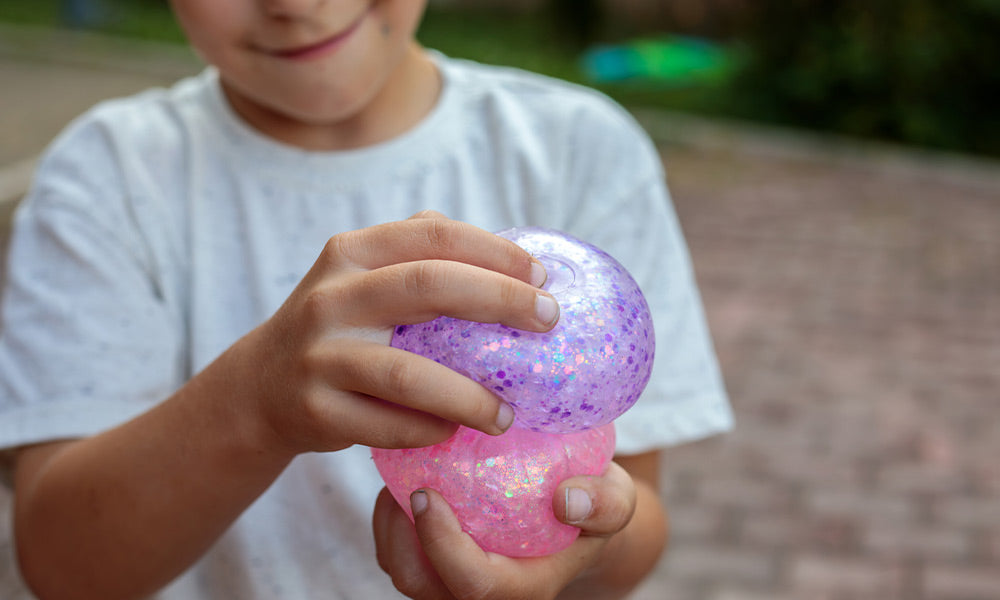
If you have a kid, there’s a decent chance you also have a squishy toy somewhere in your house. Maybe it’s shaped like a cat or a cupcake or a dumpling (my daughter’s personal favorite). Maybe it came home in a birthday party goodie bag, was won from a prize bin, or was urgently requested after your child saw someone squeezing one online.
They’re colorful, satisfying, inexpensive, and seemingly everywhere.
Now, the U.S. Consumer Product Safety Commission (CPSC) is warning parents about fake and counterfeit squishy toys that may pose serious safety risks to children. The agency is also reiterating a warning about a viral social media trend involving microwaving or otherwise heating squishy toys, which can lead to serious burns.
That sounds scary, but it doesn’t mean you need to immediately purge every squishy from your child’s room. Instead, this is a good moment to know what to look for, give the toys you already own a quick inspection, and make sure kids know that squishies belong far away from the microwave.
Here’s what parents should know.
What’s the concern with counterfeit squishy toys?
Squishy toys come in countless shapes, sizes, brands, and price points, and they’re sold everywhere from major retailers to online marketplaces and social media.
According to the CPSC, some fake or counterfeit versions may not comply with federal safety requirements for children’s toys. The agency says these products can potentially contain or release materials that pose hazards, including water beads, small parts, lead, phthalates, or other substances.
CPSC has already identified 55 shipments of violative squishy toys at U.S. ports and prevented 355,683 units from entering the country.
Some potentially unsafe toys may also lack the testing, certification, warnings, age recommendations, tracking information, or manufacturer identification required for children’s products.
In other words, the problem isn’t simply that a toy is squishy. It’s that with a counterfeit or poorly manufactured product, parents may have no reliable way of knowing what’s inside—or whether the toy has been tested to meet U.S. safety standards.
The CPSC warning is a reminder for parents and caregivers to be cautious when buying toys, especially from unfamiliar sellers or online marketplaces. Not all toys sold in the U.S. meet federal safety requirements, so it’s important to check for age-appropriate labeling, product warnings, and evidence that the toy complies with U.S. safety standards. When in doubt, choose products from reputable retailers and stop using any toy that appears damaged, has small detachable parts, or seems unsafe for a child’s age.
Some squishies can contain water beads and other fillings
One reason damaged squishy toys deserve extra attention is that their soft outer shell may contain more than foam.
CPSC says some squishy toys contain “water beads or other gels, liquids, powders, or sand.” If the covering tears or bursts, those materials can become accessible to a child.
Water beads are a particular concern because they can expand after being swallowed. CPSC warns that they can cause intestinal blockages, choking or aspiration, and can also cause injury if children insert them into their noses or ears.
Other toys may contain filling materials that aren’t easily identifiable, which is why a mysterious puddle of squishy goo probably shouldn’t become the afternoon’s newest sensory activity.
If a toy breaks open, take it out of circulation and keep kids away from whatever has spilled out.
Give the squishies you already own a quick check
No need for a forensic investigation. Think of this as the same kind of once-over you might give a favorite stuffed animal with a loose eye or a toy whose battery compartment has seen better days.
CPSC recommends stopping use of a squishy toy if:
- You don’t know who manufactured it or it lacks basic safety information.
- It has a strong chemical odor.
- It feels unusually oily or sticky.
- It is leaking.
- It tears or comes apart easily.
- It has become punctured, discolored, unusually soft, or otherwise seems to be deteriorating.
When buying a new toy, look for clear manufacturer or importer information, age grading and safety warnings. Packaging with obvious misspellings, poor-quality printing or missing information can be a red flag.
And that too-good-to-be-true bargain? CPSC notes that prices dramatically below those charged by established retailers can sometimes be a sign of a counterfeit or substandard product.
Buying from a retailer or verified seller with clear contact and return information gives you another layer of protection if something turns out to be wrong.
And please, please don’t microwave them
There’s another part of the CPSC warning that’s worth talking about with older kids and teens.
Videos circulating on social media have shown people microwaving squishy toys to watch them expand, change texture or burst.
CPSC’s guidance here is unambiguous: “These demonstrations are dangerous and should never be attempted or imitated.”
A squishy toy that’s heated can become extremely hot and burst, releasing its filling. Because that material may be sticky enough to adhere to skin, CPSC warns that it can continue transferring heat and make a burn even worse.
The microwave isn’t the only concern. Squishies should also be kept out of hot cars, away from heaters and off other hot surfaces, and shouldn’t be left in prolonged direct sunlight.
For kids who are old enough to encounter these experiments online, this can be an easy, matter-of-fact conversation: I know that looks cool in the video, but these toys can get hot enough to cause a serious burn. Squishies are for squeezing, not heating.
No lecture required.
What should you do if a squishy causes a burn?
If someone is burned by a heated or burst squishy toy, CPSC recommends immediately placing the affected skin under cool running water for at least 20 minutes.
The agency advises gently washing the area with mild soap to remove remaining material, avoiding ice, and then covering the cooled and cleaned burn with a nonstick sterile dressing.
Seek medical attention for a severe burn, a burn involving a young child, or signs of infection.
And if you’re cleaning up a toy that has burst after being heated, avoid direct skin contact with the released material.
This isn’t one more thing to panic about
Parenting can sometimes feel like an endless stream of alerts about things you didn’t know you were supposed to be worrying about. This doesn’t need to become one of them.
If your kid has a beloved squishy, you don’t necessarily need to make it mysteriously disappear overnight.
Take a look at it. Check the label and condition. Toss it if it’s leaking, breaking down, oddly sticky or questionable. Keep damaged toys and their filling away from little kids. Buy replacements from sellers you trust. And make sure everyone in the house knows that the microwave is firmly off-limits.
Then your kid can get back to doing what squishies were actually made for: squeezing them approximately 9,000 times while you wonder, once again, how your house accumulated quite so many tiny things.